Choose your download
Pick the version that matches your macOS.
Bartender 5 (macOS 14 Sonoma+) • Bartender 6 (macOS 26 Tahoe)

Bartender 5
Stable for Sequoia/Sonoma

Bartender 6
For macOS 26 Tahoe
Bartender is an award-winning app for macOS that for more than 10 years has superpowered your menu bar, giving you total control over your menu bar items, what's displayed, and when, with menu bar items only showing when you need them.
Bartender improves your workflow with quick reveal, search, custom hotkeys and triggers, and lots more.




Bartender 6 has been redesigned from the ground up to fully support macOS Tahoe and Liquid Glass. We've overhauled everything, so the entire Bartender experience should feel much smoother, faster, and more responsive whenever you interact with your menu bar.

Lightning-fast access to your menu bar items is now even better. Get instant access to your hidden menu bar items simply by swiping or scrolling in the menu bar, clicking on the menu bar, or if you prefer, simply hovering.

Access the menu bar items otherwise hidden by the notch on MacBook Air and Pro screens. Bartender will automatically hide your currently shown menu bar items when needed to create room to show the items hidden by the MacBook Air and Pro screens notch, giving you access to all your menu bar items.
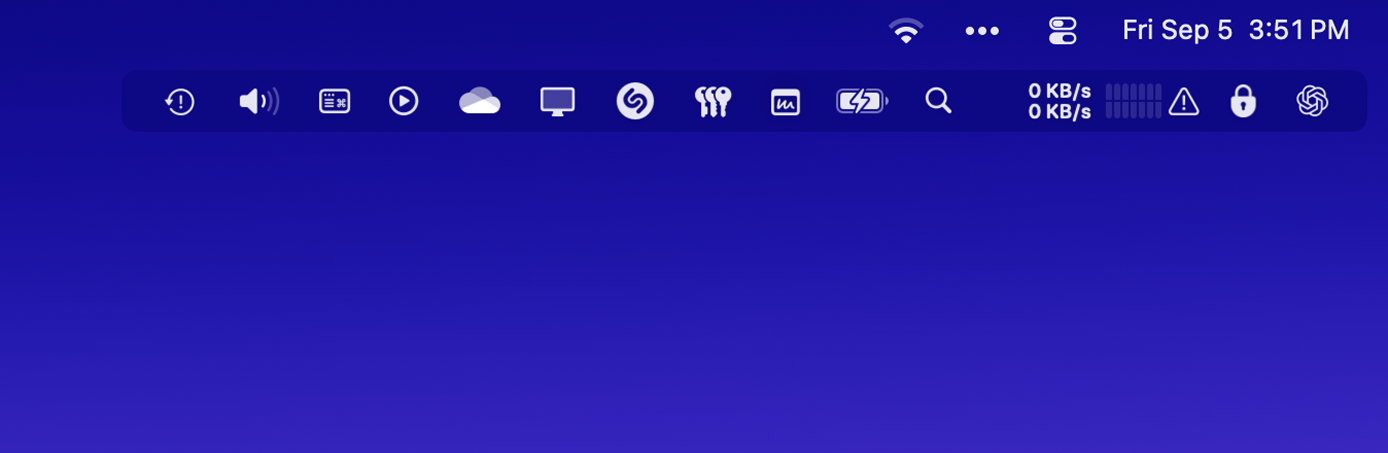
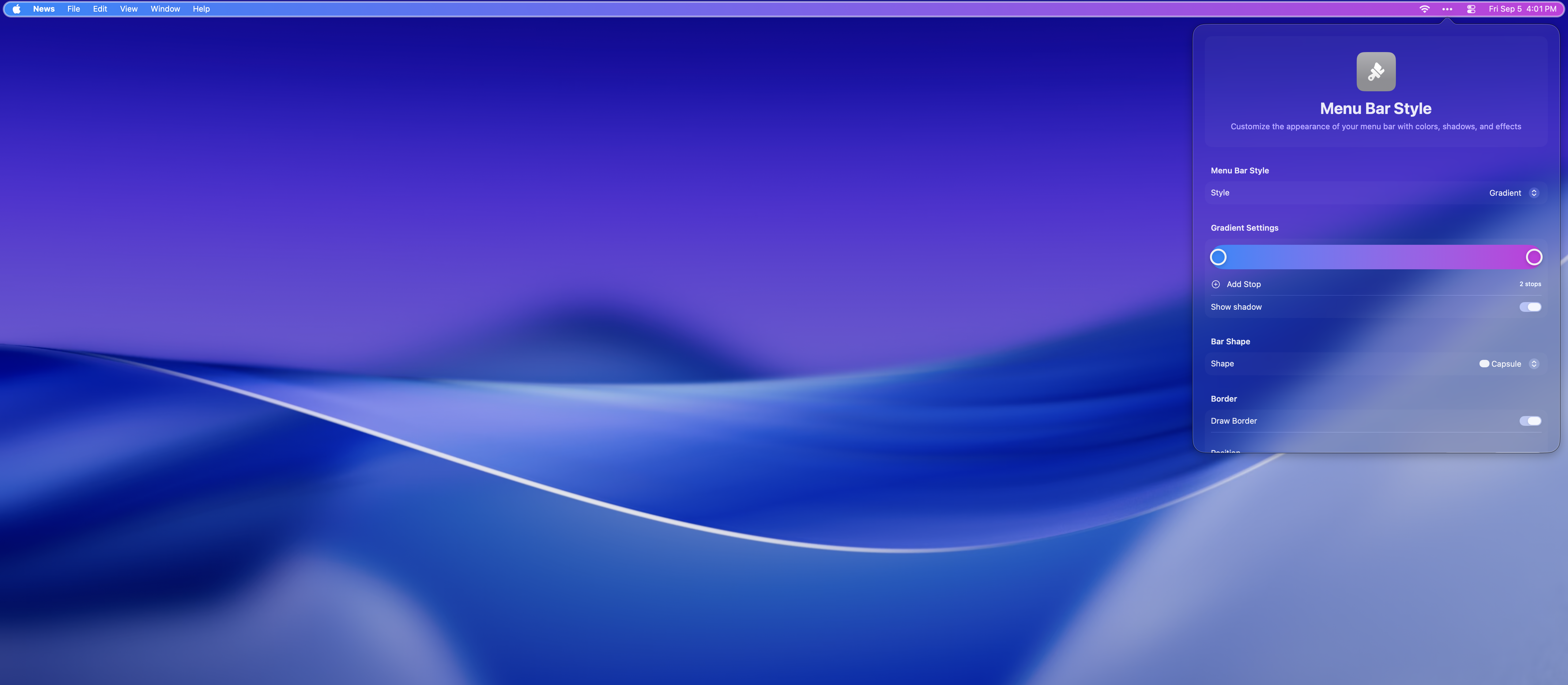

Make your menu bar your own, with menu bar styling you can:
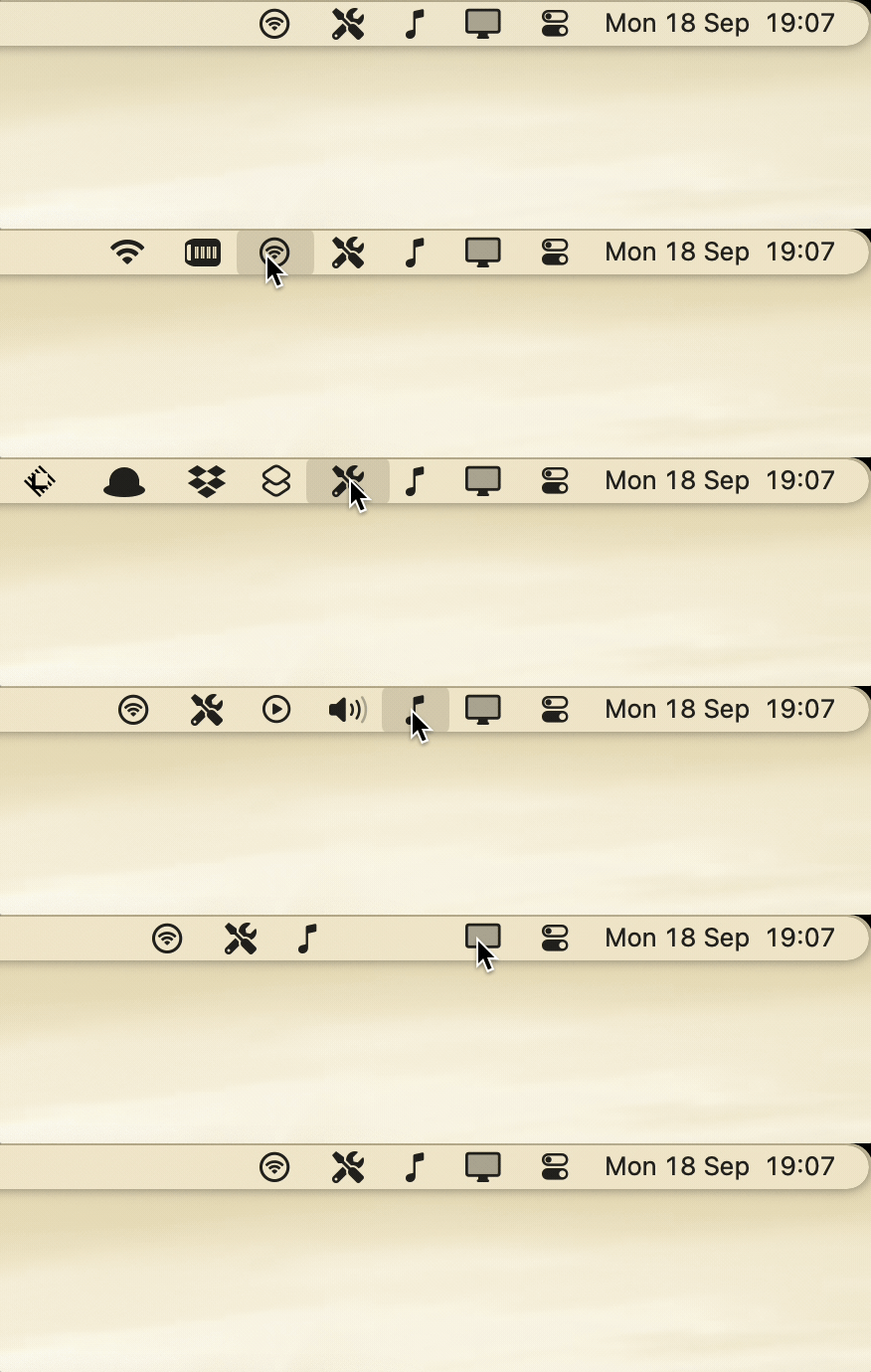
Combine multiple menu bar items into one customisable menu bar item, and have quick access to all the menu bar items within.
For example group all your cloud drive apps together like Dropbox, OneDrive, Google Drive.
Have a group for connection related items such as Wi-Fi and VPN.
And another for media related items, like volume, media controls, airplay.
This can be a great way to have access to all your menu bar items on a MacBook Pro or Air with limited menu bar space due to the screen notch.
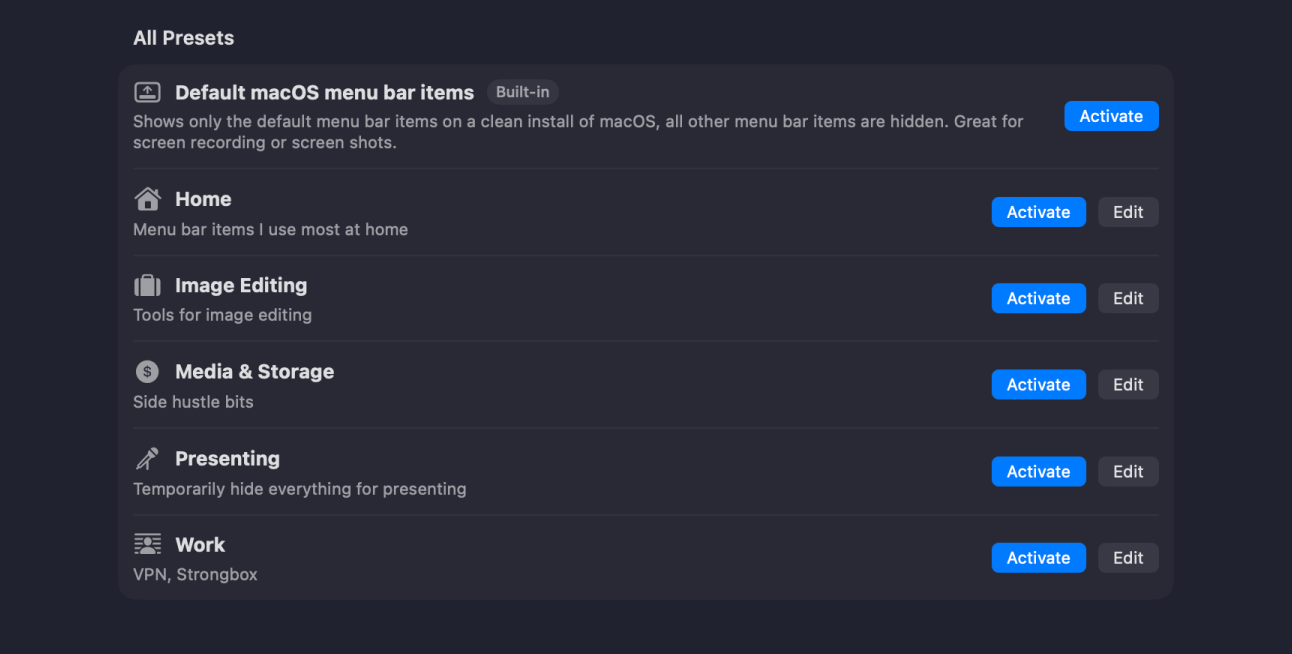
Create as many presets as you want and always have the right menu bar items available for your current workflow.
Show the macOS default menu bar items when recording your screen or screen sharing
Show work specific menu bar items in work hours, then social media items when at home... the possibilities are endless.
Presets can be automatically applied via triggers and also by macOS Focus modes.
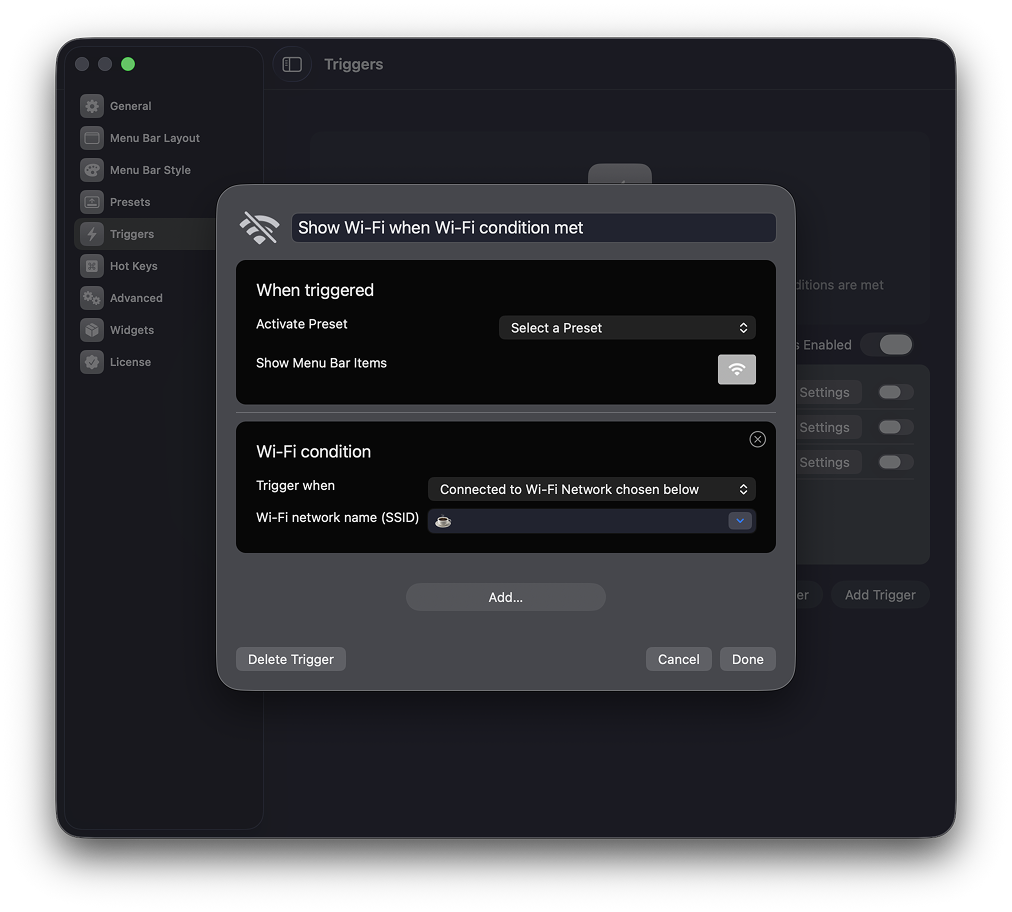
With a completely new Trigger system
you can apply a preset automatically, or show a set of menu bar items whenever your trigger conditions are met. Triggers conditions currently include
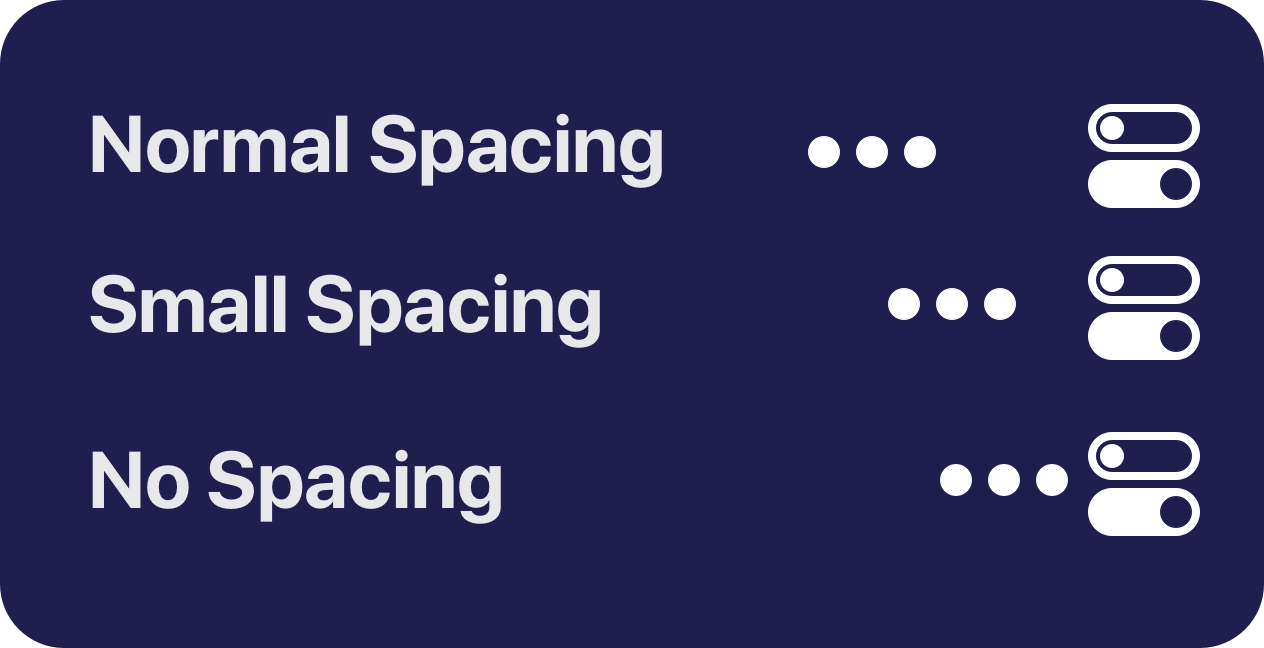
Reduce the space between menu bar items using Bartender, allowing you to have more menu items onscreen before reaching the macbook notch. Or just purely for style.
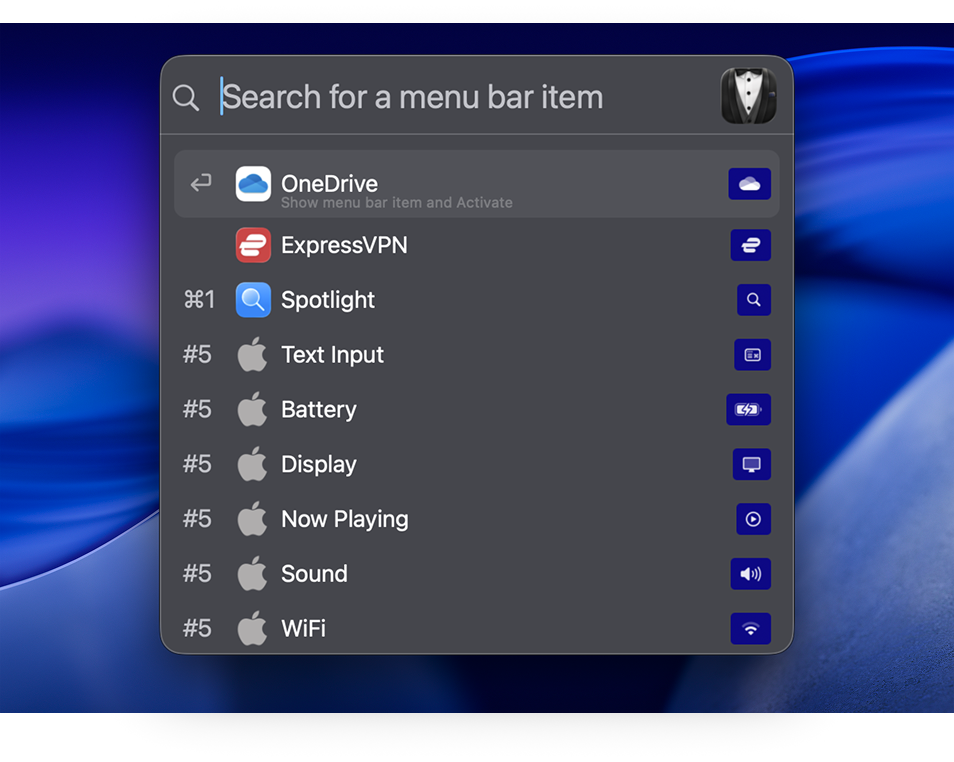
Quick Search will change the way you use your menu bar apps.
Instantly find, show, and activate menu bar items, all from your keyboard.
* the macOS screen capture menu bar item can show when using this. more info
Bartender 6 is designed for all the great changes in macOS Tahoe.
Bartender 6 runs native and lightning-fast on Apple Silicon and Intel macs.
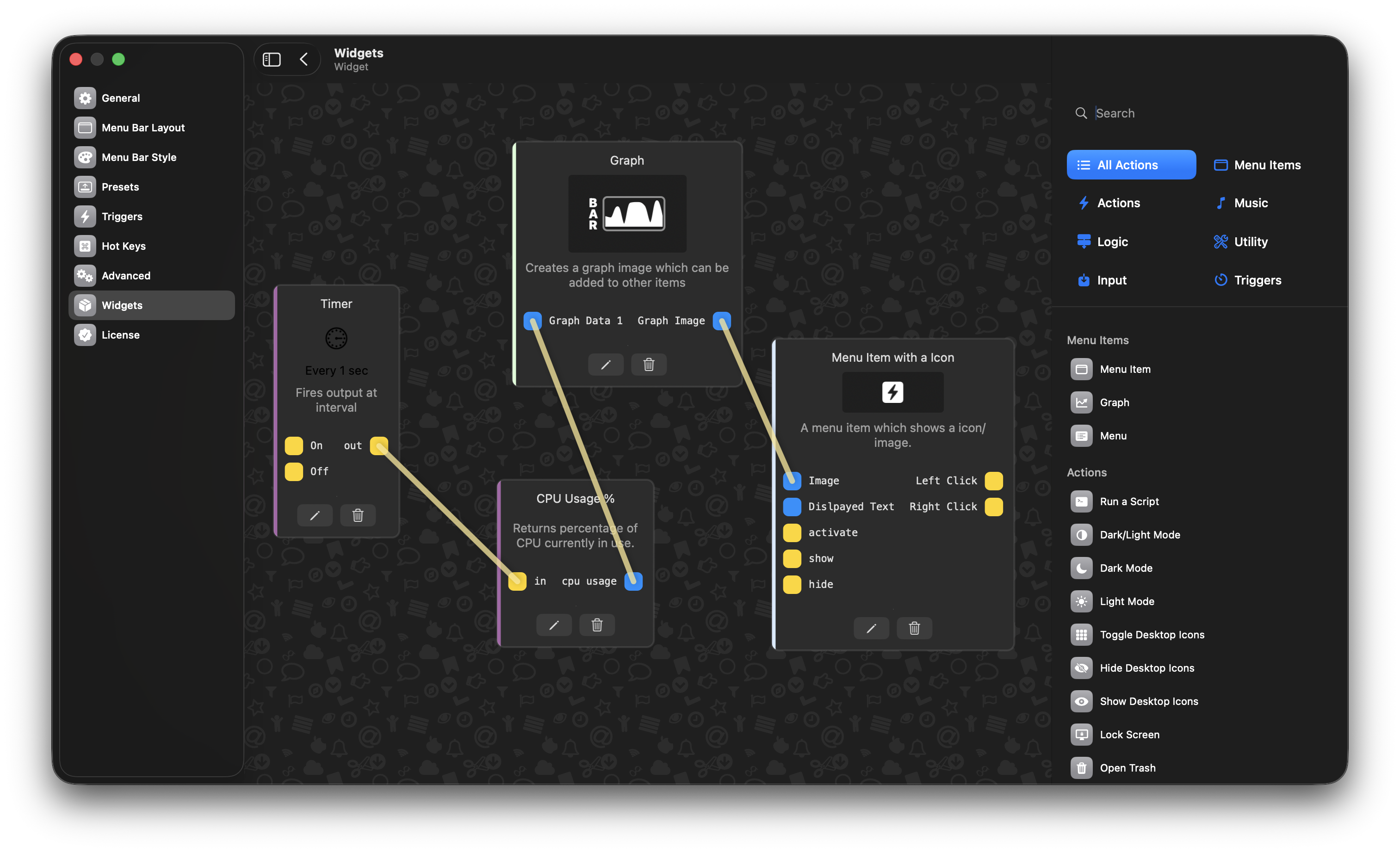
Create your own menu bar items
With Bartender widgets you can create your very own custom menu bar items, that trigger pretty much any action you want, no coding required.
Add hotkeys for any menu bar item; this can show and activate any menu bar item via any hotkey you assign.
With Spacers, your menu bar is uniquely your own, with the ability to customize menu item grouping and display labels or emojis to personalize your menu bar.
Use Apple Script to show and activate menu bar items. Fantastic for some advanced workflows.
Swap shown items for your hidden ones to take up less menu bar space, allowing you to have more menu bar items on a smaller screen.
You can choose where new menu items will appear in your menu bar, shown for instant access, or hidden for less distraction.
The Nexus Player remains a surprisingly capable device for playing . Because it runs Android TV, it allows you to install Kodi or VLC, turning a $99 (or much less used) hockey puck into a full-fledged media center. The "exclusive" part comes from its Intel-based architecture, which handles menu navigation efficiently.
: Popular community-driven ROMs like LolliRock or unofficial versions of LineageOS can enhance performance or add a full Android interface instead of the limited Leanback launcher.
is turning it into a dedicated retro console. Using specialized ISO images like
Back out to the main Settings menu, open , and toggle Developer Options and OEM Unlocking to "On". Unplug the power cable from the back of the Nexus Player.
: Requires TWRP Recovery and potentially a USB-OTG adapter for a keyboard/mouse, as the standard remote is often insufficient for full Android. Android TV x86 (ISO for PC) : nexus player iso exclusive
Navigate to the extracted directory using the change directory command: cd C:\platform-tools Step 2: Unlock the Bootloader
Use the button on the bottom of the Nexus Player to navigate and confirm the unlock command if prompted. 3. Flashing the Exclusive Factory Image
: Creating a "Complete Content Package" for specific use cases, such as digital signage or specialized gaming setups.
It remains a prime device for developers looking to understand the core functionality of Android TV. Conclusion The Nexus Player remains a surprisingly capable device
If the device freezes on the logo, return to the fastboot menu and run the fastboot format userdata command to completely wipe leftover encrypted files from old software builds.
To understand the cult of the Nexus Player, one must understand the hardware. Manufactured by Asus, the device was powered by an Intel Atom Z3560 processor (Moorefield architecture). This choice of an x86 chip, rather than the ARM architecture standard in almost all other Android devices, was the Nexus Player’s Achilles' heel in the consumer market. Many Android apps simply weren’t compiled for x86, leading to crashes and instability.
Google Nexus Player X 86 Mesa 17 Kernel 4.9 - Internet Archive
The Nexus Player was an innovative device for its time, offering a glimpse into Google's vision for smart TV and home entertainment. While it had its limitations, particularly in terms of gaming and current software support, it provided a solid streaming experience with unique features like voice control through Google Assistant. For those looking for a straightforward streaming solution and already embedded in the Google ecosystem, the Nexus Player could still serve as a viable option, especially considering its potential for repurposing as a dedicated media player or for specific use cases like running Kodi or Plex for media management. : Popular community-driven ROMs like LolliRock or unofficial
This x86 architecture set it apart from virtually every other Android streaming stick on the market. It was essentially a tiny PC running Android Lollipop 5.0. However, this power came with a critical limitation: only 8GB of internal storage (roughly 5.5GB usable). At launch, Google positioned the Nexus Player as a "micro-console." They offered a $99 base unit and a $39 dedicated gamepad, hyping titles like Asphalt 8: Airborne and Modern Combat 5 on the big screen.
Bare-metal or lightweight Linux environments can offer lower input latency and more predictable frame timing than Android’s compositing window manager. For retro-gaming or real-time audio applications, an ISO exclusive could outperform an Android app.
It functioned as an early, built-in Chromecast. 2. The Search for "Nexus Player ISO" and Factory Images In the context of the Nexus Player
Unlocking the bootloader is mandatory to flash custom or archived operating system images. Note that this process wipes all data on the device. Power on the Nexus Player and go to .